

Laboratory Testing
Cement Testing
Cement Testing for Quality, Performance & Standards Compliance
Cement testing is essential for evaluating the physical and chemical properties of cement and cementitious materials and verifying conformance with applicable specifications. Commonly referenced standards include ASTM C150, ASTM C595, and ASTM C618, along with other ASTM, AASHTO, and project-specific requirements.
SGS TEC Services provides independent laboratory testing to help cement manufacturers, material suppliers, engineers, and other stakeholders evaluate material quality, consistency, performance, and compatibility with concrete mix designs.
Physical & Chemical Testing of Cement
A combination of physical and chemical tests can be used to characterize cement and understand how it may perform when incorporated into concrete.
Compressive strength testing is commonly performed to evaluate strength development over time. Mortar cubes may be tested at specified ages, such as 3, 7, and 28 days, depending on the applicable standard or specification.
Chemical and compositional analysis can provide additional information about cement composition and characteristics, helping evaluate material quality, consistency, and compliance with specified requirements.
Contact us to discuss your cement testing requirements or determine the appropriate test methods for your material or application.
Cement Testing Methods & Standards
SGS TEC Services performs cement and cementitious materials testing in accordance with applicable ASTM, AASHTO, U.S. Army Corps of Engineers (USACE), and other industry standards and specifications.
Common test methods include:
| ASTM C10 | Specification for Natural Cement |
| ASTM C91 | Specification for Masonry Cement |
| ASTM C109 | Compressive Strength of Hydraulic Cement Mortars (2×2 Cubes) |
| ASTM C114 | Chemical Analysis of Hydraulic Cement |
| ASTM C150 | Specification for Portland Cement |
| ASTM C151 | Autoclave Expansion of Portland Cement |
ASTM C157 | Length Change of Hardened Hydraulic-Cement Mortar and Concrete |
ASTM C183 | Sampling and the Amount of Testing of Hydraulic Cement |
| ASTM C185 | Air Content of Hydraulic Cement Mortar |
| ASTM C187 | Normal Consistency of Hydraulic Cement |
| ASTM C188 | Density of Hydraulic Cement |
| ASTM C191 | Time of Setting of Hydraulic Cement by Vicat Needle |
| ASTM C204 | Fineness of Hydraulic Cement by Air-Permeability Apparatus |
| ASTM C226 | Air-Entraining Additions for Use in the Manufacture of Air-Entraining Hydraulic Cement |
| ASTM C227 | Potential Alkali Reactivity of Cement-Aggregate Combinations |
| ASTM C230 | Flow Table for Use in Tests of Hydraulic Cement |
| ASTM C266 | Time of Setting of Hydraulic-Cement Paste by Gillmore Needles |
ASTM C270 | Standard Specification for Mortar for Unit Masonry |
ASTM C305 | Mechanical Mixing of Hydraulic Cement Pastes and Mortars of Plasic Consistencies |
ASTM C311 | Sampling and Testing Fly Ash or Natural Pozzolans for Use in Portland-Cement Concrete |
| ASTM C348 | Flexural Strength of Hydraulic-Cement Mortars |
| ASTM C349 | Compressive Strength of Hydraulic-Cement Mortars (Portions of Prisms Broken in Flexural) |
| ASTM C359 | Early Stiffening of Hydraulic Cement |
| ASTM C430 | Fineness of Hydraulic Cement by the 45-µm (No. 325) Sieve |
ASTM C441 | Effectiveness of Pozzolans or Ground Blast-Furnace Slag in Preventing Excessive Expansion of Concrete Due to the Alkali-Silica Reaction |
| ASTM C451 | Early Stiffening of Hydraulic Cement (Paste Method) |
| ASTM C452 | Potential Expansion of Portland-Cement Mortars Exposed to Sulfate |
ASTM C465 | Standard Specification for Processing Additions for Use in Hydraulic Cements |
ASTM C511 | Moist Cabinets, Moist Rooms, and Water Storage Tanks Used in the Testing of Hydraulic Cements and Concretes |
ASTM C563 | Optimum SO3 in Hydraulic Cement Using 24-hr Compressive Strength |
ASTM C593 | Standard Specification for Fly Ash and Other Pozzolans |
| ASTM C595 | Specifications for Blended Hydraulic Cements |
| ASTM C596 | Drying Shrinkage of Mortar Containing Hydraulic Cement |
ASTM C618 | Specifications for Coal Fly Ash and Raw or Calcined Natural Pozzolan for Use in Concrete |
| ASTM C786 | Fineness of Hydraulic Cement and Raw Materials by the No. 50, No. 100, and No. 200 Sieves by Wet Methods |
| ASTM C806 | Restrained Expansion of Expansive Cement Mortar |
| ASTM C807 | Time of Setting of Hydraulic Cement Mortar by Modified Vicat Needle |
| ASTM C845 | Specifications For Expansive Hydraulic Cement |
| ASTM C1012 | Length Change of Hydraulic-Cement Mortars Exposed to A Sulfate Solution |
| ASTM C1038 | Expansion of Hydraulic Cement Mortar Bars Stored in Water |
ASTM C1090 | Measuring Changes in Height of Cylindrical Specimen of Hydraulic-Cement Grout |
| ASTM C1157 | Specifications for Hydraulic Cements |
ASTM C1222 | Evaluation of Laboratories Testing Hydraulic Cement |
ASTM C1240 | Silica Fume Used in Cementitious Mixtures |
| ASTM C1328 | Specification for Plastic (Stucco) Cement |
| ASTM C1329 | Specification for Mortar Cement |
| ASTM C1437 | Flow of Hydraulic Cement Mortar |
| ASTM C1506 | Water Retention of Hydraulic Cement-Based Mortars and Plasters |
ASTM C1567 | Determining the Potential of Alkali-Silica Reactivity of Combinations of Cementitious Materials and Aggregate (Mortar-Bar Method) |
| ASTM C1583 | Tensile Strength of Concrete Surfaces and the Bond Strength or Tensile Strength of Concrete Repair and Overlays Materials by Direct Tension |
ASTM C1600 | Standard Specification for Rapid Hardening Hydraulic Cement |
| ASTM R18 | Establishing and Implementing a Quality System for Construction Materials Testing Laboratories |
| ASTM AC459 | Acceptance Criteria for Proprietary Hydraulic Cement |
| ISO/IEC 17025 | General Requirements for the Competence of Testing and Calibration of Laboratories |
Cement & Cementitious Materials We Test
- Type C-Ash
- Type F-Ash
- Silica Fume
- Slag
- Natural Pozzolan
- Portland Cement
- Blended Cements
- Masonry Cements
- Reclaimed Fly Ash
- Glass
- Calcium Aluminate Cements
- And more.
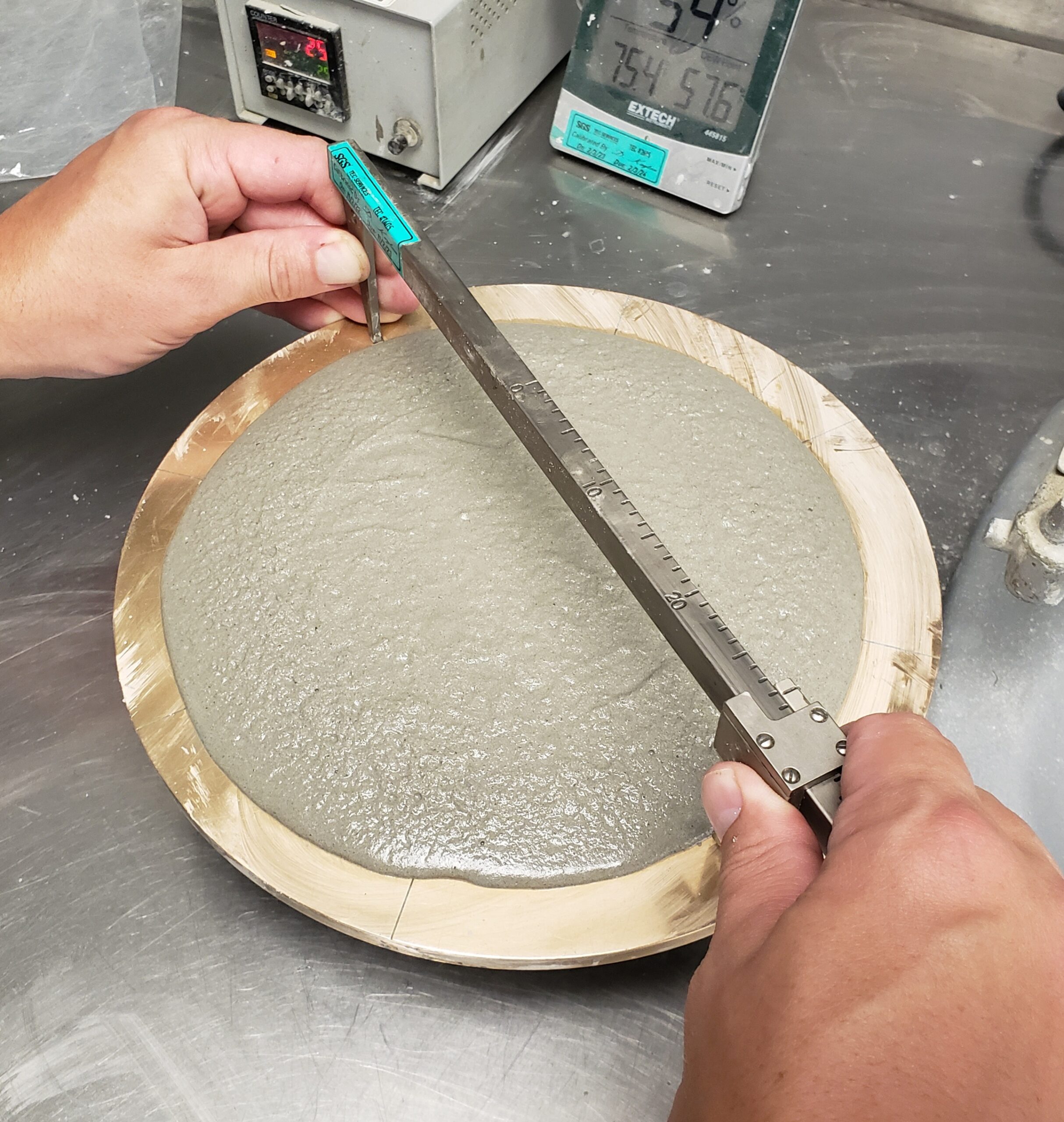

Cement Lab


Sulfate Testing