
Petrography
Petrographic Analysis
Understand Material Composition, Performance and Causes of Deterioration for Concrete, Aggregates & Other Construction Materials
Petrographic analysis provides detailed insight into the composition, condition and performance of concrete, aggregates and other construction materials. Using microscopic examination and advanced analytical techniques, our experienced petrographers evaluate concrete, aggregate, rock, mortar and other cementitious materials to identify material characteristics, deficiencies and signs of deterioration.
Examination can help determine why a material is cracking, deteriorating or performing unexpectedly. It can reveal characteristics of the materials and their manufacture, identify deterioration mechanisms and provide evidence to support troubleshooting, quality assurance, failure investigations and durability assessments.
Testing Capabilities
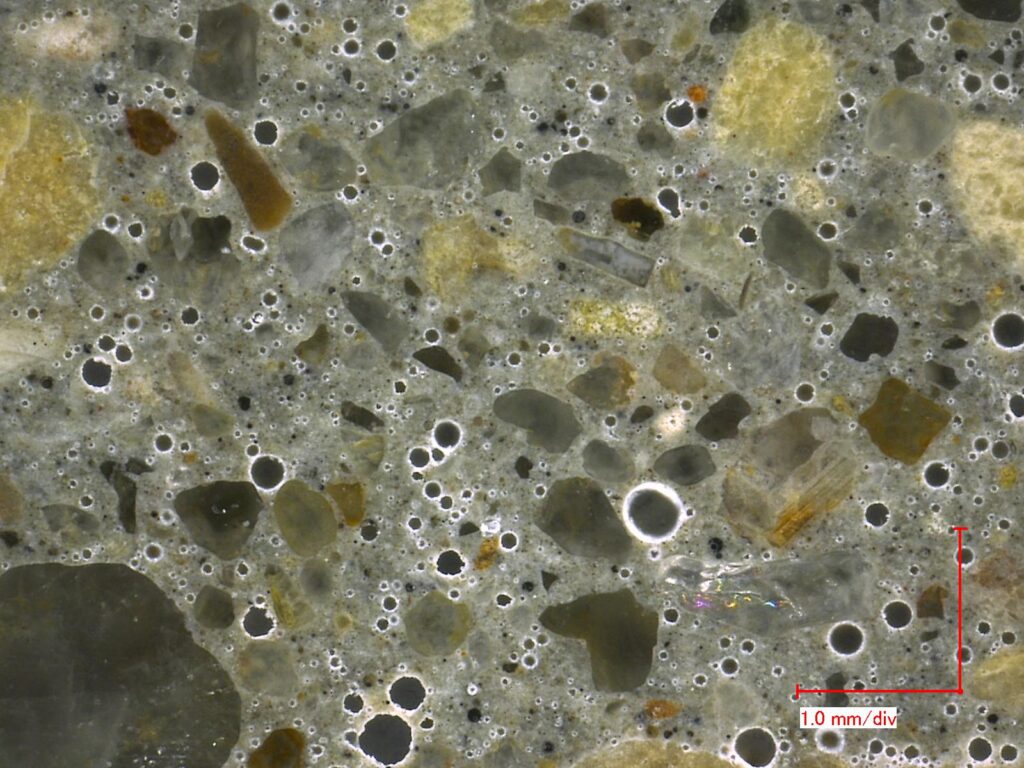
Concrete ASTM C856
Applies to the analysis of samples of all types of hardened concrete hydraulic-cement mixtures.
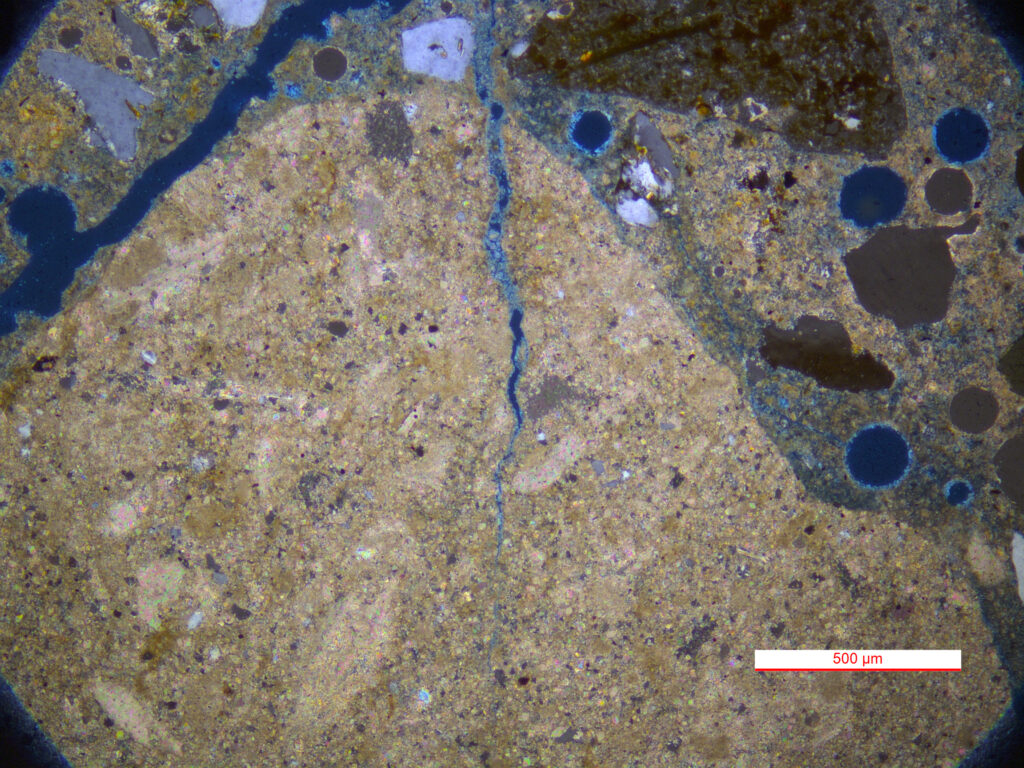
Aggregates ASTM C295
Applies to the analysis of aggregates intended for use in concrete and other cementitious mixtures.
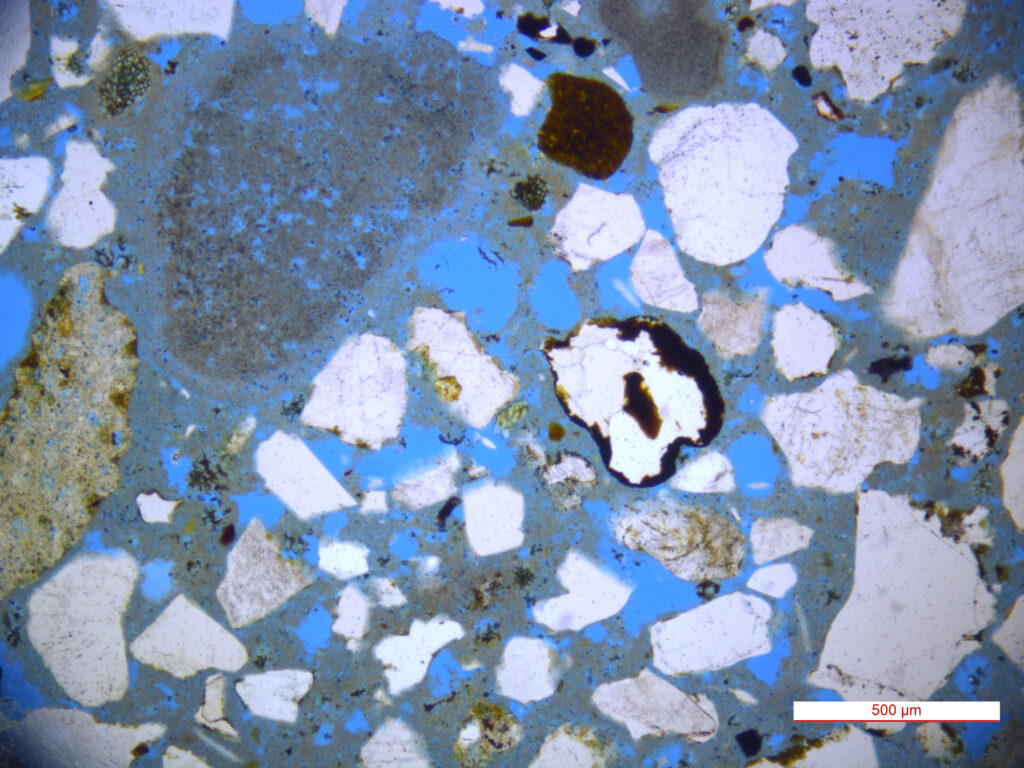
Mortars ASTM C1324
Applies to the microscopic examination and chemical analysis of hardened masonry masonry mortar.
Why Choose SGS TEC Services?
Construction Materials Testing Has Been Our Specialty for More Than 20 Years
Petrography isn’t an ancillary service within our laboratory – it is an integral part of our construction materials testing and forensic investigation capabilities.
Accredited Construction Materials Laboratory
SGS TEC Services maintains ISO/IEC 17025 and AASHTO accreditations, supported by rigorous quality systems, established laboratory procedures and recognized industry standards.
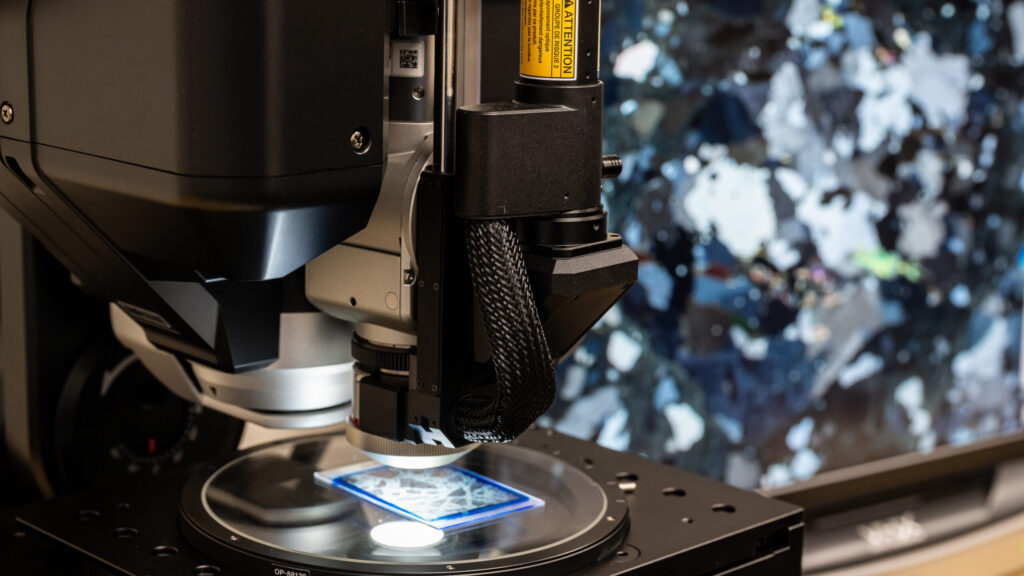
Our petrography laboratory combines traditional petrographic examination with advanced analytical instrumentation. Specialized laser-based elemental analysis technology integrates high-magnification imaging with real-time chemical characterization, allowing our petrographers to observe, identify and analyze materials within a single platform.
These capabilities help us investigate complex material conditions and provide accurate, defensible results.
Experienced Petrographers, Geologists & Engineers
Our multidisciplinary team includes petrographers, professional geologists, engineers and materials specialists experienced in evaluating concrete, aggregates and other construction materials.
We work with engineers, contractors, DOT agencies, municipalities, owners and material producers across North America to investigate material deterioration, distress mechanisms, construction defects, durability concerns and unexpected performance.
ASTM & Industry Expertise
Our team has extensive knowledge of ASTM standards, industry specifications and construction materials testing practices, backed by decades of experience in forensic investigations, failure analysis, quality assurance and compliance evaluations.
Our specialists also actively participate in ASTM and other industry organizations, contributing their technical expertise to the continued development of construction materials standards and practices.
Local Expertise – Global Resources
SGS TEC Services is part of SGS, a global leader in testing, inspection and certification. Our specialized construction materials and petrography expertise is supported by the technical resources and capabilities of a worldwide testing organization.
What Questions Can Petrography Answer?
Our concrete and aggregate petrography services give engineers, contractors, owners, manufacturers and agencies the information they need to:
- Investigate cracking, deterioration and premature material failure
- Identify deterioration mechanisms and material deficiencies
- Evaluate concrete composition, condition and quality
- Characterize aggregates, minerals and potentially deleterious constituents
- Investigate suspected alkali-silica reaction (ASR) and other durability concerns
- Evaluate construction and material-related defects
- Support quality assurance and specification compliance
- Inform repair, rehabilitation and long-term durability decisions
Need Answers About Your Concrete or Aggregate?
Whether you’re investigating concrete deterioration, evaluating aggregate quality, troubleshooting a material failure or assessing long-term durability, our petrography experts can help determine what is happening within the material – and provide the technical information you need to determine your next steps.
Contact our petrography laboratory to discuss your material, project or investigation.
Related Link
Technical Resources
Frequently Asked Questions About Petrography
Our petrographer typically use:
• Visual examination of the sample
• Stereo microscopy to inspect surfaces and fracture features
• Polarized light microscopy to examine thin sections of the material
• High-resolution photography and photomicrographs
• Sometimes supplemental testing such as chemical analysis or scanning electron microscopy (SEM)
A petrographic examination can help answer questions such as:
- Why are my compressive strength values less than the design?
- How do I know the provided concrete matches the mix design?
- Was too much air entrainment added to the concrete?
- Is it time to remove and replace the existing concrete slab?
- Why do I have so much efflorescence on my concrete?
- Did the material quality contribute to the building collapse?
- What is the condition of the concrete in the old building?
- What is the probable future performance of my concrete?
- Why is my slab surface color blotchy?
- How much surface preparation is required?
- Why are there so many cracks in my slab?
- Why did the surface of the concrete flake off?
- What materials were used in the historic mortar?
- Can this aggregate be used in concrete?
- Why is this concrete cracking?
- Is the aggregate causing deterioration?
- Was the concrete made according to the specified mix design?
- Is there evidence of poor workmanship or improper curing?
- Is this an alkali-silica reaction (ASR)?
- Has freeze-thaw damage occurred? • Is sulfate attack present?
- Are there signs of delayed ettringite formation (DEF)?
- Why did this pavement, bridge deck, or structure fail prematurely?
- What minerals are present in the aggregate?
ASTM C856: Used for hardened concrete investigations ASTM C856 is the standard practice for petrographic examination of hardened concrete.
ASTM C295: Used to evaluate aggregates before use or during failure investigations. ASTM C295 is the standard guide for petrographic examination of aggregates for concrete.
ASTM C1324: Used for mortar analysis. ASTM C1324 is the standard test method for examination and analysis of hardened masonry mortar.
Petrography is the microscopic analysis of rocks, minerals, and other materials used to determine their mineralogical composition, fabric, and physical characteristics. By preparing samples as thin sections and examining them under optical and analytical microscopes, petrographers can characterize constituent phases, assess material performance, and investigate the causes of degradation and failure.
Petrography is most valuable during:
- Failure investigations – determining why a structure deteriorated.
- Pre-construction material qualification – assessing aggregate suitability.
- Litigation and insurance claims – providing independent technical evidence.
- Condition assessments – evaluating existing structures.
- Quality assurance and troubleshooting – verifying materials and workmanship.
Used by engineers, consultants, contractors, DOTs, attorneys, and owners, petrography often provides the evidence needed to answer the most important question: “What happened, and why?”

ISO/IEC 17025 American Association for Laboratory Accreditation

AASHTO Accreditation Program (R18)

Members of American Society for Testing & Materials