
Petrography
Petrographic Examination of Concrete – ASTM C856
Our experienced geologists, petrographers, and engineers perform petrographic examination of concrete in accordance with ASTM C856 to evaluate the composition, condition, quality, and characteristics of hardened concrete.
Concrete petrography provides detailed insight into the internal structure of concrete and can help identify material deficiencies, deterioration mechanisms, construction-related issues, and other conditions that may contribute to cracking, reduced durability, poor performance, or failure.
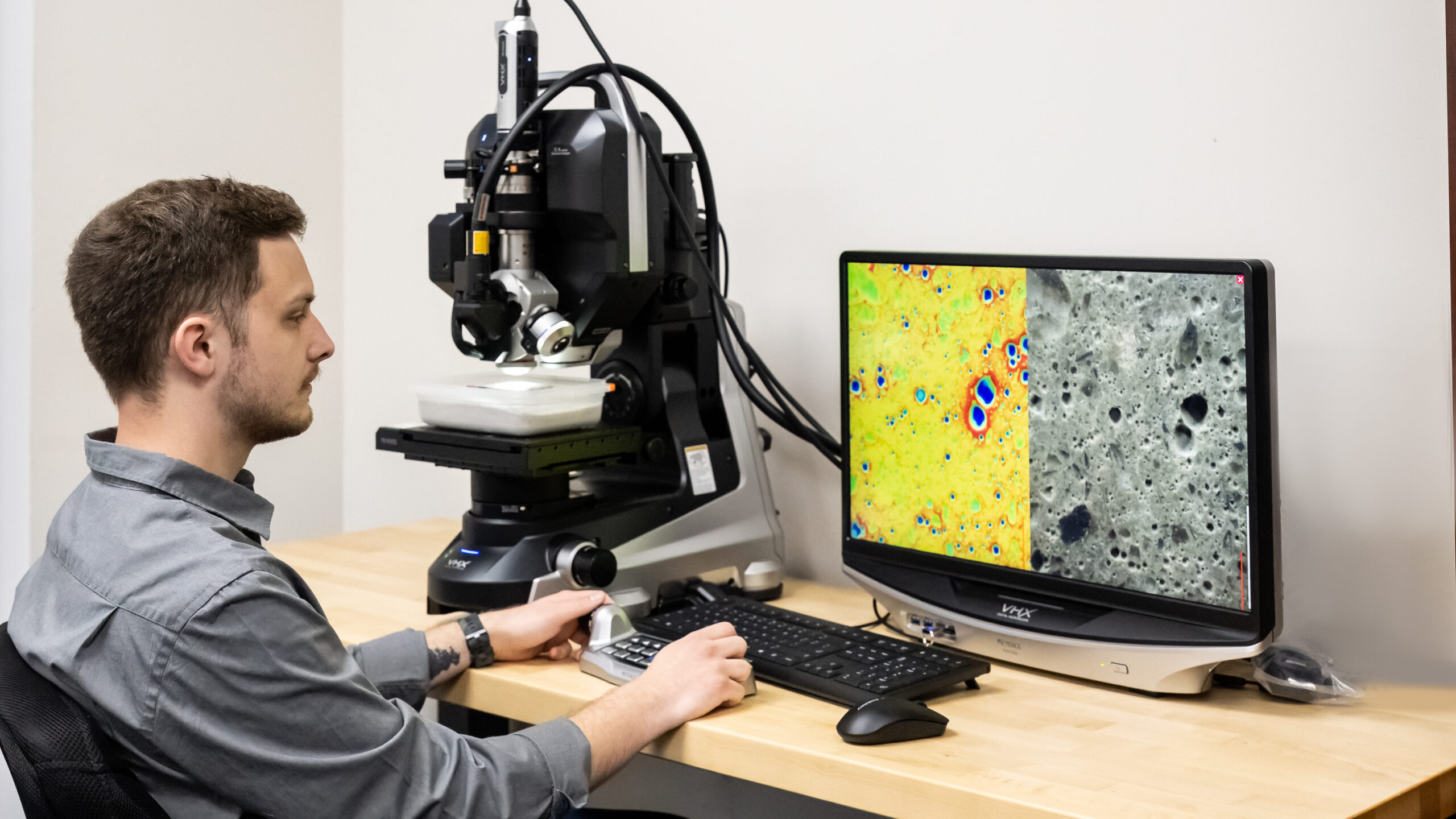
Our petrography laboratory combines high-magnification microscopy with advanced analytical technology, including laser-based elemental analysis, to examine hardened concrete samples and investigate their composition, microstructure, condition, and performance.
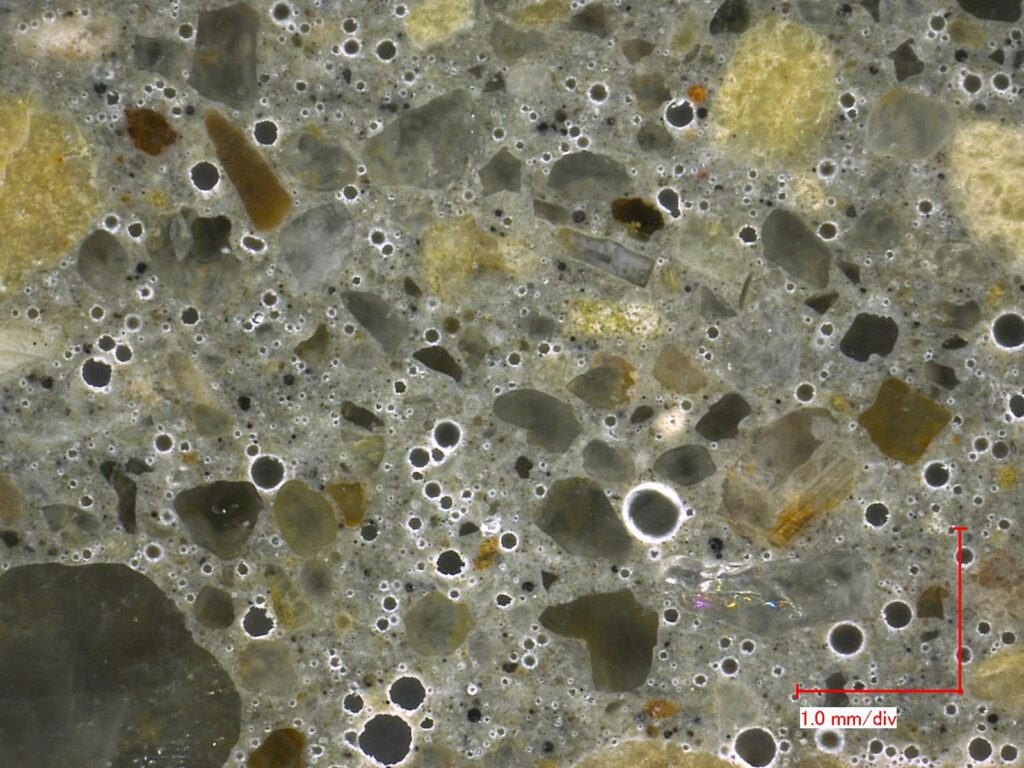
Samples are typically prepared from concrete cores or test cylinders through cutting, grinding, polishing, and other preparation techniques. Prepared surfaces are then examined microscopically at magnifications ranging from approximately 10x to 60x for lapped sections and up to 400x for thin sections.
What Can Concrete Petrography Identify?
Depending on the objectives of the investigation, concrete petrographic examinations can identify or evaluate:
- Water to Cement Ratio
- Air Content
- Chemical Attack
- Alkali Silica Reactions (ASR)
- Freeze Thaw Damage
- Paste Carbonation
- Low Strength Concrete
- Coating Failure or Delamination
- Moisture Vapor Issue
- Improper Curing
- Consolidation
- Porosity of Paste
- Corrosion of Reinforcing Steel
- Fire Damage
- Cracking Investigation
- Sulfate Attack
- Improper Finishing
- Seismic Damage
- Supplemental Cementitious Material (Fly Ash, Slag, etc.)
- Aggregate Mineralogy
- Aggregate Segregation
- Topping Verification
- Water Content
What Questions Can Concrete Petrography Answer?
A petrographic examination of concrete can help determine why concrete is cracking, deteriorating, discoloring, exhibiting low strength, or performing differently than expected. These findings provide engineers, contractors, owners, and material producers with evidence to support troubleshooting, failure investigations, repair decisions, and durability assessments.
Common questions our petrographers help answer include:
- Why are my compressive strength values less than the design?
- How do I know the provided concrete matches the mix design?
- Was too much air entrainment added to the concrete?
- Why did the surface of the concrete flake off?
- What is the existing condition of the concrete in my 40 year old building?
- Why is my concrete a completely different shade of gray in some areas?
- Is the existing surface of my concrete slab capable of accepting a coating?
- Why are there so many cracks in my slab?
- Is it time to remove and replace the existing concrete slab?
Concrete Petrography Expertise
Our accredited petrography laboratory provides comprehensive concrete petrography and construction materials testing capabilities for routine evaluations, quality investigations, forensic analysis, and complex material performance issues.
Whether you need to investigate deterioration, evaluate existing concrete, verify material characteristics, or determine the cause of an unexpected failure, our petrographers can help provide the information needed to make informed decisions.
Contact our petrography laboratory to discuss your material, project or investigation.


